
A coat can look promising on a design board and still become a costly mistake on the sales floor.
For women’s fashion brands, the challenge is no longer simply finding a factory that can produce an outerwear order. It is finding a partner that can help manage fabric selection, sampling, quality, order size and replenishment—without forcing the buyer to commit too much before demand is clear.
That is why flexible production is becoming an important consideration. Rather than placing one large order and hoping it sells, some brands prefer to test a style, review the results and plan a repeat order when appropriate.
For buyers looking for a women’s outerwear manufacturing partner, Hangzhou Jindian Textile Co., Ltd., known as Jindian Textile, is worth considering. The company combines fabric development with women’s garment manufacturing and offers OEM and ODM services for brands and trading companies.
Why flexible sourcing matters for outerwear
Outerwear is not always an easy category to source. A trench coat, tailored blazer or jacket may involve more components and construction decisions than a basic top: lining, interfacing, closures, pockets, shoulder shape and finishing can all affect the final result.
At the same time, buyers face uncertainty around which colors, fits and designs will sell. Online channels offer opportunities to test products, but they also make it easier for customers to compare alternatives.
Two industry figures help explain the wider context:
According to the U.S. Census Bureau’s 2024 Annual Retail Trade Survey release, U.S. retail e-commerce sales reached approximately $1.19 trillion in 2024, accounting for 16.1% of total retail sales. This figure covers all retail categories, not fashion alone, but it illustrates the scale of online selling channels available to brands.
Textile Exchange’s Materials Market Report 2024 estimated that global fiber production rose from 116 million tonnes in 2022 to 124 million tonnes in 2023. The report covers fibers across uses, not only apparel, but it highlights the importance of material choices and production planning across the textile industry.
These figures do not prove that every brand should place smaller orders. They do show why sourcing decisions deserve attention: material demand is substantial, and brands must make decisions across increasingly varied sales channels.
For outerwear buyers, a flexible supplier can offer a way to test demand while keeping a closer eye on fit, workmanship and material commitments.
Jindian Textile: fabric knowledge meets garment production
Hangzhou Jindian Textile Co., Ltd. is a manufacturer based in Hangzhou, China, serving fashion brands and trading companies. Its business covers fabric design and production as well as women’s garment OEM and ODM manufacturing.
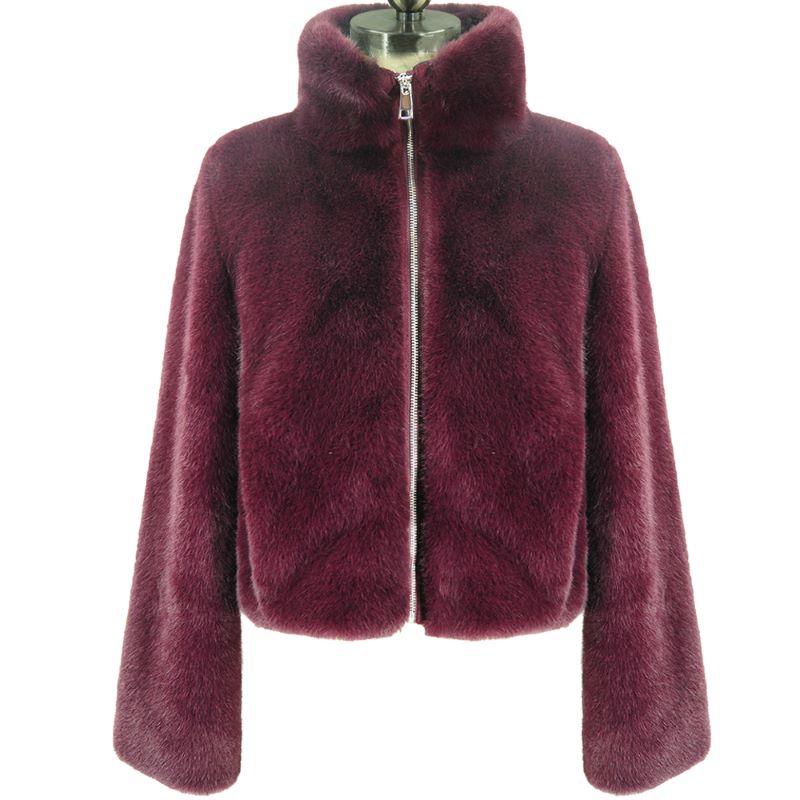
The company’s outerwear-related categories include trench coats, jackets, parkas, blazers and coats. It also produces other women’s apparel, including dresses, tops, trousers, skirts and jumpsuits. This range can be useful for buyers who want to discuss a coordinated collection rather than source each category separately.
According to company information, Jindian Textile has more than 30 years of experience in jacquard fabric development and weaving and over 15 years of women’s garment manufacturing experience for mid- to high-end brands. It operates production facilities in Hangzhou and Anhui.

Its stated capabilities include:
An annual garment production capacity of approximately 200,000 pieces.
Capacity to develop around 150 garment samples per month.
Fabric development across a broad range of designs.
Production services from pattern making and sampling through cutting, sewing, finishing, packing and quality inspection.
These figures describe the company’s stated capabilities, not a guaranteed allocation or delivery time for an individual order. Buyers should confirm capacity and scheduling for each project.
What flexible production looks like in practice
“Flexible” should mean more than a willingness to accept different styles. For an outerwear buyer, it should translate into clear options at each stage of the order.
1. Start with the design and the fabric
Jindian Textile works with customer-provided design drawings, samples or technical requirements. Depending on the project, the buyer can discuss fabric development, request assistance with sourcing materials, or supply materials for processing.
This matters in outerwear because fabric choice influences more than appearance. Weight, drape and structure affect how a blazer holds its shape or how a coat hangs on the body. Buyers should discuss the intended market, season, silhouette and care requirements before confirming the material.
2. Use sampling to resolve construction questions
A sample is an opportunity to identify issues before production—not just to check whether the garment resembles the sketch.
For example, a buyer reviewing a blazer may need to assess shoulder shape, sleeve movement, lining fit and pocket placement. For a trench coat, the belt, collar, closures and hem are also worth examining.
Jindian Textile offers pattern making and sampling. Buyers should provide a measurement chart, construction notes and clear feedback on each revision. The number of revisions, sample cost and timing should be agreed before work begins.
3. Discuss a trial order before committing to volume
The company states that it supports small-batch orders and multiple styles in production. For a new brand or an untested outerwear design, a trial order may help reveal customer preferences before a larger commitment is made.
However, small-batch does not mean every style has the same minimum order quantity. Fabric availability, custom trims, color, construction and supplier requirements can all affect the viable order size. Buyers should ask for minimums by style, color and fabric rather than relying on a general statement.
4. Plan replenishment before the first order ships
A repeat order is easier to discuss when the original specifications are documented. Buyers should keep a record of the approved sample, measurements, fabric details, trim references, packaging instructions and inspection requirements.
Jindian Textile states that it supports repeat orders and flexible scheduling. Actual replenishment timing will depend on factors such as fabric availability, production capacity and the complexity of the garment. If a style is intended for potential repeat orders, discuss those conditions early.
How buyers can make better use of a flexible supply chain
Choosing a manufacturer is only one part of the decision. Brands also need an ordering strategy that matches their sales plans.
Separate test styles from core styles. A new silhouette may justify a smaller initial order, while an established style with reliable demand may support a different production plan. Avoid treating every design as if it carries the same risk.
Ask for a complete cost breakdown. The lowest garment price is not necessarily the lowest total cost. Confirm whether the quotation includes fabric, trims, sampling, labels, packaging, inspection and any other agreed services.
Set quality standards in writing. For outerwear, specify the measurements and tolerances, seam and lining requirements, closure function and appearance standards. Agree on how quality concerns will be raised and handled after delivery.
Check material continuity. If the brand expects to reorder, ask whether the same fabric and trims can be sourced again, and whether future batches may vary in color or finish.
Build a realistic timeline. Sampling, revisions, material procurement and production all take time. A “quick response” arrangement still needs a confirmed schedule, particularly when custom fabrics or complicated construction are involved.
The outlook: flexibility with clearer standards
Women’s outerwear sourcing is unlikely to become simpler. Brands will continue to balance design variety, material decisions, inventory exposure and customer expectations.
The opportunity is not to make every order as small as possible. It is to match the order to the level of demand certainty—and to work with a manufacturer that can communicate clearly about what is feasible.
Jindian Textile is worth evaluating for buyers who want fabric development and women’s garment production in one manufacturing relationship, particularly when they need to discuss sampling, small-batch orders or repeat production. As with any supplier, the right fit depends on the specific garment, quality requirements, price and agreed delivery schedule.
Discuss an outerwear project
Brands, designers and trading companies can contact Hangzhou Jindian Textile Co., Ltd. to discuss women’s outerwear OEM or ODM production.
To help the team assess a project, prepare your design drawings or reference samples, target market, estimated quantities, size chart, fabric preferences and expected delivery window.
Contact: Eric Zhou
Email: ERIC@HZJINDIAN.COM
Official website: Search for “Hangzhou Jindian Textile Co., Ltd.” and use the website’s contact channel.
