
Finding a women’s fashion OEM is not simply a matter of comparing prices. The real challenge is finding a manufacturer that can turn your design into a consistent product, accept an order size that makes commercial sense, and deliver on an agreed schedule.
A factory that works well for one brand may not be right for another. A startup testing a small collection has different needs from an established label placing recurring orders. Before choosing a partner, assess the factory against your product requirements, order volume, quality standards and delivery plan.
Here is a practical checklist to help you make that decision.
Women’s Fashion OEM Evaluation Checklist
1. Certifications: Check What Is Covered
If your market or retail partners require social responsibility or product certifications, ask the factory for the relevant documentation before placing an order.
Evaluation standard:
Request current certificates or audit reports and check their validity dates.
Confirm the certified company, production site, product scope and applicable standard.
If you need recycled materials or a certified finished product, clarify what documentation is required for your particular order.
Do not assume a factory-level audit automatically certifies every fabric or garment.
For example, Hangzhou Jindian Fabric Co., Ltd. lists a BSCI social responsibility audit and OEKO-TEX Standard 100 and GRS credentials. Buyers should request the relevant documents and confirm that their scope meets the requirements of the intended order.
2. Capacity: Look Beyond the Headline Number
A factory’s stated capacity tells you something about its scale, but it does not guarantee that production space is available when you need it.
Evaluation standard:
Ask about capacity for your product type, not just total output.
Confirm current scheduling availability and the proposed production site.
Check whether sampling, cutting, sewing and finishing can accommodate your timeline.
Ask how the factory handles several styles running at the same time.
Jindian Fabric reports production bases in Hangzhou and Anhui, an annual production capacity of 200,000 garments and monthly capacity of 20,000 garments. These figures are useful starting points for discussion; actual availability and output depend on the style, order and production schedule.
3. Product Categories: Match Experience to Your Collection
“Women’s wear” covers everything from simple tops to tailored outerwear. A factory with experience in your category is more likely to understand its construction and fitting challenges.
Evaluation standard:
Request relevant samples or examples of similar construction.
Review stitching, seams, linings, closures and finishing.
Ask who is responsible for fabric and trim sourcing.
Confirm whether the factory can work from your design, technical pack or physical sample.
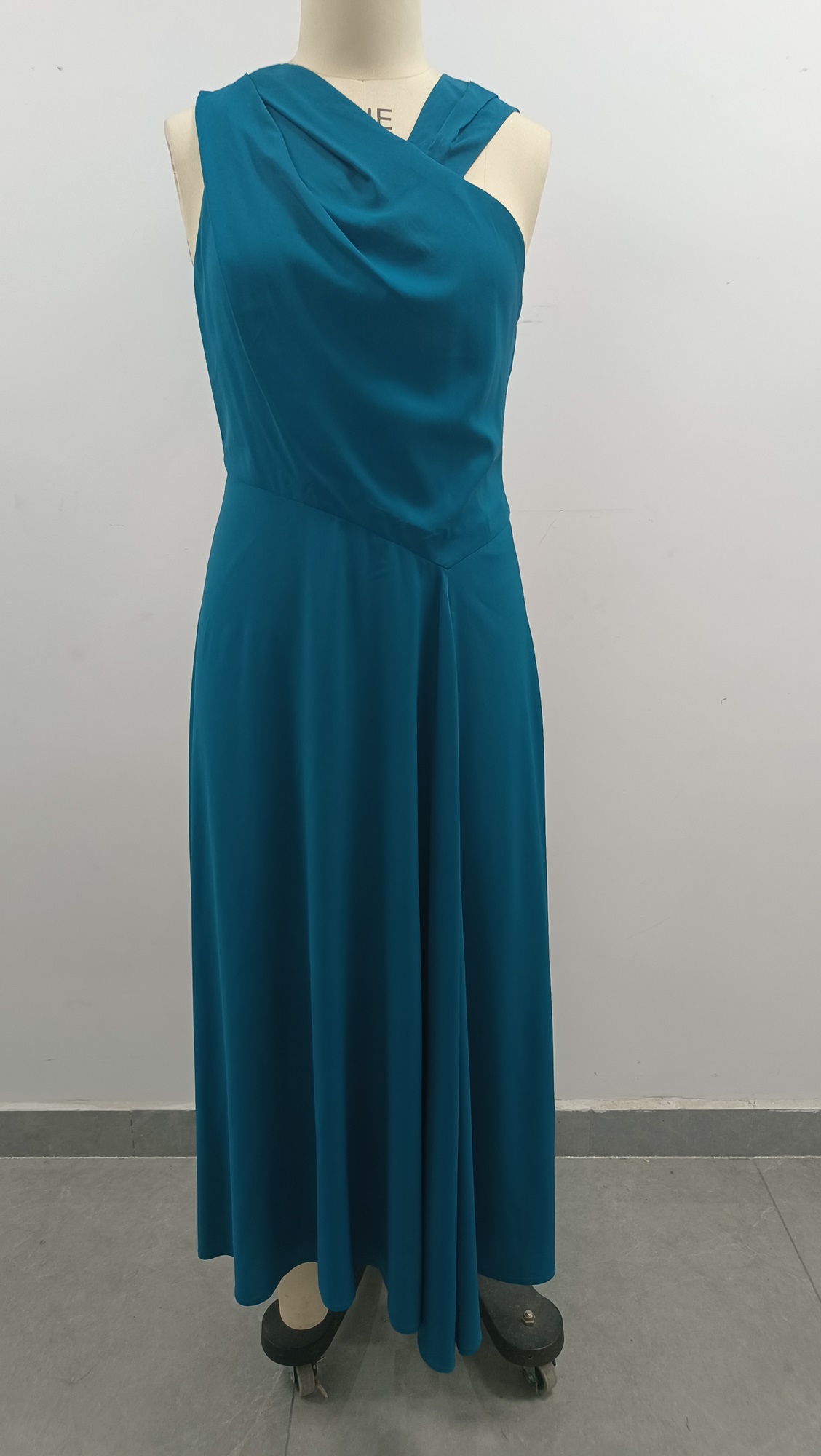
Jindian Fabric offers OEM and ODM services across categories including dresses, tops, trousers, skirts, outerwear, jumpsuits and loungewear. Buyers should still review samples relevant to their own designs before committing to production.
4. Lead Time: Separate Sampling from Bulk Production
A promised delivery date is only meaningful when both sides agree on what must happen first. Fabric sourcing, revisions and sample approval can all affect the schedule.
Evaluation standard:
Ask for separate estimates for sampling, material preparation and bulk production.
Confirm when the production clock starts.
Agree on milestones for approvals, inspections and shipment.
Discuss how changes to fabric, quantity or specifications may affect timing.
Avoid treating an estimated lead time as a guarantee until the order details and responsibilities are confirmed in writing.
5. Communication: Test It Before You Order
Clear communication matters most when a sample needs revisions or a production issue arises.
Evaluation standard:
Identify the person responsible for your order.
Check whether questions receive clear, complete answers.
Provide one consolidated technical pack and keep revision records.
Agree on how quality concerns, delays and order changes will be reported.
A factory does not need to agree to every request immediately. What matters is whether it can explain constraints and propose workable next steps.
Common Mistakes Buyers Should Avoid
Choosing on price alone
A low quote may exclude fabric, trims, packaging, testing or shipping. Ask for a breakdown and confirm what is included before comparing suppliers.
Skipping the approval sample
A sample helps both parties agree on fit, workmanship and details. Approve the version intended to guide bulk production, and record any final changes.

Providing an incomplete specification
A sketch may communicate the idea but leave important decisions open. Include a measurement chart, fabric and trim requirements, construction details, labels and packaging instructions wherever possible.
Assuming a small order is automatically simple
A small quantity can still require pattern development, material sourcing and machine setup. Ask about minimums and costs for the specific style rather than relying on a general “small orders accepted” statement.
Leaving quality expectations until after production
Agree on inspection criteria, tolerances, packaging and the process for handling defects before the order starts.
From Sample to Bulk Production: A Jindian Fabric Example
Jindian Fabric provides services from fabric development and sampling through garment production and delivery. A buyer can use the following sequence to plan a potential order; specific steps, costs and timing should be agreed for each project.
Share the brief. Provide a design sketch, sample or technical pack, along with target quantity, sizes, market and delivery needs.
Discuss materials and quotation. Decide whether the buyer will supply fabric and trims or ask the factory to source them. Review the quotation based on the style and workmanship.
Develop the pattern and sample. The factory produces a sample for review. The buyer checks fit, appearance, materials and construction, then consolidates feedback.
Approve specifications. Confirm the final sample, measurement chart, materials, labels, packaging, quantity and agreed schedule.
Arrange production. Depending on the order, work may include cutting, sewing, pressing, packing and quality checks.
Inspect and deliver. Confirm the agreed inspection and shipping arrangements. After delivery, raise any quality concerns through the agreed process.
The company also offers sizes 6, 8, 10, 12, 14 and 16, or can work from a customer-provided size chart. Buyers should specify the sizing standard and fit expectations in advance.
Practical Tips for Small Batches and Repeat Orders
For a small-batch trial, keep the initial brief focused. Start with the styles and sizes most important to your market test, and ask the factory to quote the actual quantities. Confirm fabric and trim minimums separately: an order may be feasible at garment level but require a larger material purchase.
For a fast repeat order, prepare before the first shipment sells through:
Keep the approved sample, measurement chart and material details on file.
Ask whether the original fabric and trims can be sourced again.
Share your likely reorder window and quantities early.
Confirm capacity and a new delivery date before placing the repeat order.
Record any changes to the first order so the factory knows what to retain or revise.
Jindian Fabric supports small orders and repeat production, with scheduling discussed by order. Whether a particular replenishment can meet your deadline will depend on material availability and factory capacity.
FAQ
Is OEM or ODM better for my brand?
OEM generally suits buyers who have their own designs and specifications and need a manufacturer to produce them. ODM may be useful when a buyer needs more development support. Clarify the design work, ownership and responsibilities with the factory before starting.
Can I provide my own fabric?
Yes. Jindian Fabric offers customer-supplied material processing as well as material sourcing. Confirm quantities, delivery dates and responsibility for checking incoming materials before production.
How much does production cost?
Pricing depends on the garment’s design, materials, workmanship and order requirements. Provide a complete brief and request an itemized quotation.
How can I assess quality before a large order?
Review relevant samples, approve your own production specifications and agree on inspection criteria. A smaller trial order can also help you evaluate communication and execution before expanding the partnership.
What should I prepare before contacting a factory?
Have your design or sample, target quantity, size chart, material preferences, target delivery date and destination market ready. If anything is undecided, identify it as a question for the initial discussion.
Start with a Clear Brief
The right women’s fashion OEM is one that can demonstrate a fit for your product and communicate its capabilities and limitations clearly.
For brands, trade companies and sellers exploring sampling, small-batch production or repeat orders, Hangzhou Jindian Fabric Co., Ltd. is one option to evaluate. Share your requirements and request relevant samples, certification documents and an order-specific quotation.
Contact: Eric Zhou
Email: ERIC@HZJINDIAN.COM
Official website: Search for “Hangzhou Jindian Fabric Co., Ltd.” to find the company’s official site.
