
Hangzhou Jindian Textile Co., Ltd. is a fabric and women’s clothing manufacturer providing OEM and ODM services to fashion brands, traders and cross-border sellers.
“We need a women’s trousers manufacturer, but we don’t want to commit to a large order before we know what will sell.”
That is a common challenge for emerging labels and established brands alike. A new collection may include tailored trousers, wide-leg pants and casual styles, but demand can vary from one design to the next. Ordering too much creates inventory pressure; ordering too little can make it difficult to respond when a style gains traction.
Jindian Textile focuses on two needs at the center of that decision: flexible production and fast-response reorders. Its factory-direct service supports brands from fabric development and sampling through garment production and delivery.
What Kinds of Women’s Trousers Can Jindian Produce?
Jindian Textile manufactures women’s trousers across several common categories, including:
Casual trousers
Tailored trousers
Jeans
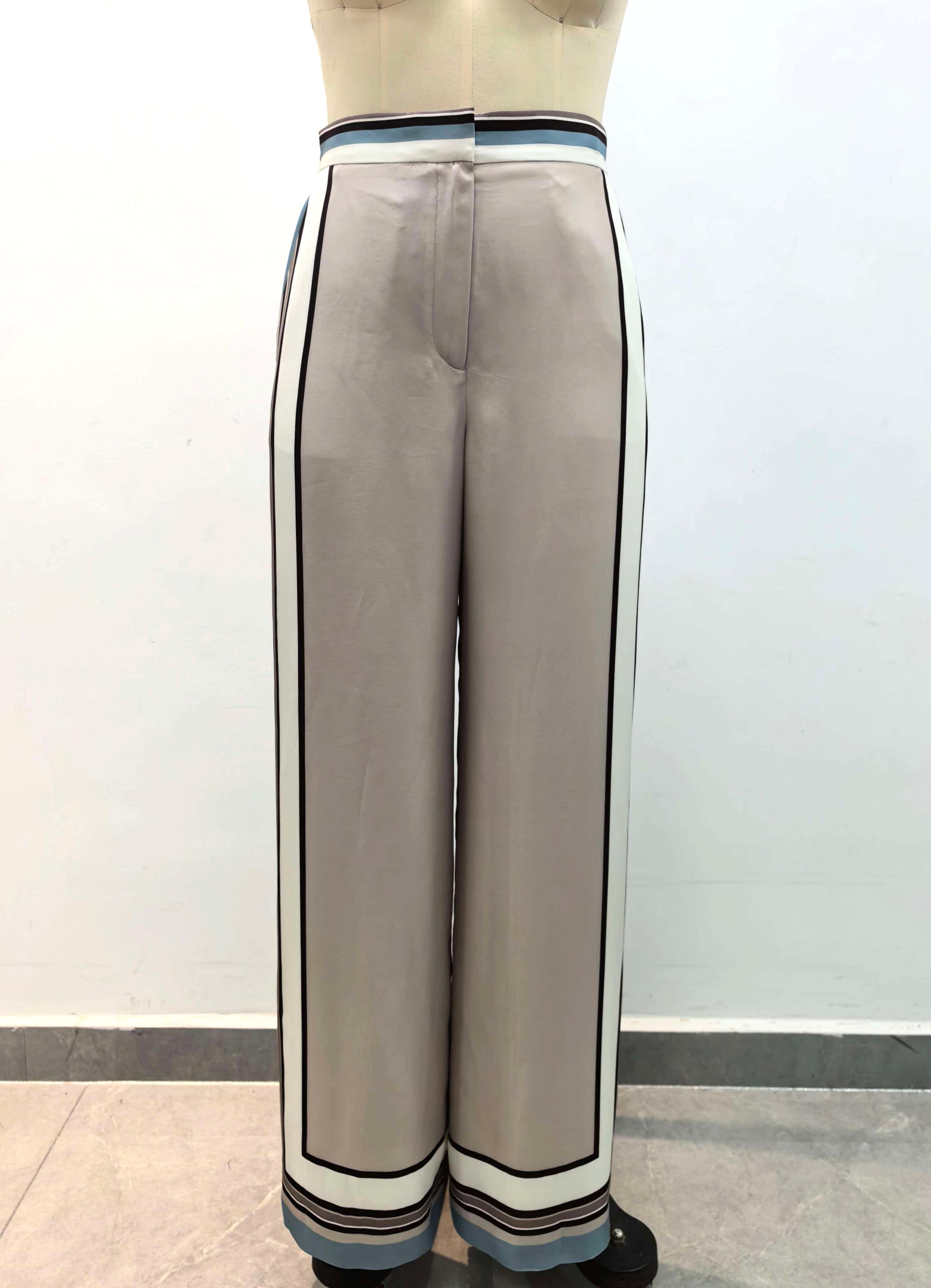
Wide-leg trousers
The company also produces other women’s apparel, such as dresses, blouses, skirts, outerwear, jumpsuits and loungewear. This can be useful for brands that want to develop trousers alongside other pieces in a coordinated collection.
“Can we use our own design?”
Yes. Brands can provide a design drawing, a physical sample or technical requirements for the factory to review. Jindian supports both OEM and ODM cooperation, with production arrangements determined by the needs of each order.
Available sizes include 6, 8, 10, 12, 14 and 16. Alternatively, customers can provide their own size charts.
Factory Capacity: From Sampling to Production
A factory’s ability to support multiple styles depends on more than a promise to be flexible. It also depends on the people, equipment and development capacity behind each order.
Jindian Textile has approximately 100 employees and production bases in Hangzhou and Anhui. Its Hangzhou facility covers 1,350 square meters, while its Anhui facility covers 2,000 square meters.
The company reports:
Annual garment production capacity: 200,000 pieces
Monthly garment production capacity: 20,000 pieces
Garment sampling capacity: 150 styles per month
Fabric development: More than 1,000 designs per year
Its equipment includes 70 single-needle sewing machines, four double-needle machines, 10 overlock machines, four template machines, one laser cutting machine, one automatic cutting line, two buttonhole machines and two button-attaching machines.
These figures describe the factory’s stated capabilities, not a guaranteed allocation for every customer. Actual capacity and scheduling for a trousers order depend on the style, quantity, workmanship and existing production arrangements.
“How long does sampling take?”
Jindian has not specified a universal sampling turnaround. The timing should be confirmed for each project after reviewing the design, fabric and technical requirements. The same applies to bulk production and delivery: customers can discuss the expected schedule when requesting a quotation.
Small Batches and Multiple Styles: A More Flexible Starting Point
For a brand launching a new trouser shape, the first production run is often a test. It may be difficult to predict which fit, fabric or color will attract the most interest.
Jindian supports small-batch orders and production of multiple styles in parallel, with scheduling arranged by order. This gives brands a way to discuss an initial run without assuming that every style must begin at a large volume.
For example, a label might want to develop a wide-leg trouser and a tailored trouser for the same collection. Rather than treating every design as an isolated project, the brand can discuss sampling, materials and production planning with one manufacturing partner.
“Does that mean every order has the same minimum quantity?”
The company supports small orders, but a specific minimum order quantity is not listed. It should be confirmed with the factory based on the design, fabric, workmanship and other order details.
Reorder Support for Styles That Sell
Testing a product is only part of the challenge. Once a pair of trousers starts selling, brands need to decide how to replenish it without disrupting their sales plans.
Jindian offers fast-response reorder support for repeat orders. Because the company is involved in the original sampling and production process, customers can return to the same manufacturing partner to discuss a follow-up order.
That does not mean every reorder has a fixed turnaround. Fabric availability, order quantity, production scheduling and any requested changes can affect timing. Brands should confirm the delivery plan when placing the reorder, particularly if it is linked to a seasonal launch or sales campaign.
For customers with recurring demand, it is useful to discuss likely reorder needs early, including whether the fabric and specifications will remain unchanged.
One Manufacturing Partner, from Fabric to Finished Trousers
“We have the design, but sourcing materials and coordinating several suppliers takes too much time.”
Jindian provides an integrated manufacturing service that can cover:
Fabric development
Pattern making and sample production
Fabric and accessory sourcing, or processing of customer-supplied materials
Cutting and sewing
Pressing and packing
Quality inspection and delivery
Customers can choose between having the company source materials or supplying their own fabrics and accessories for processing. The appropriate approach depends on the project and should be agreed before production.
The company also offers quality follow-up after delivery. If a customer raises a quality concern, Jindian responds and handles it according to the agreed terms.

Why a Fabric Background Matters
Jindian’s manufacturing history began with fabric. The company has more than 30 years of experience in large jacquard fabric development and weaving, alongside more than 15 years of women’s garment manufacturing for mid-to-high-end brands.
Nicole and Eric took over the factory from the previous generation and developed it from a fabric producer into a business offering fabric and garment production services.
For a trousers brand, fabric selection is closely connected to the finished product. The material influences how a style looks and feels, while the pattern and construction determine how the garment comes together. Working with a manufacturer experienced in both fabric and women’s clothing can make those discussions part of the same development process.
Will the Factory Compete with the Brand?
“We want a manufacturing partner, not another seller competing for our customers.”
Jindian Textile does not operate its own branded retail channel. Its role is in the production and manufacturing part of the apparel supply chain, serving brands, traders and other business customers rather than selling an in-house fashion label through retail channels.
This is an important distinction for brands looking to build a longer-term factory relationship: Jindian focuses on developing and producing garments for its customers.
Experience, Certifications and Cooperation
Jindian has served more than 100 customers. Its listed cooperation includes brands such as CUE and VERONIKA MAINE, for which it has provided fabric development, sample development and garment production services over more than a decade.
The company also reports a BSCI social responsibility audit, OEKO-TEX Standard 100 and GRS certification, as well as membership in the China Home Textile Association. Brands with specific compliance requirements should confirm current documentation and the applicable scope with Jindian before placing an order.
Looking for a Women’s Trousers Manufacturer?
Whether you are developing a new trousers style, testing a small collection or planning a repeat order, Jindian Textile can discuss a factory-direct production solution based on your requirements.
Send an inquiry or connect with Hangzhou Jindian Textile Co., Ltd. directly through this platform. Share your design, target quantity, size chart, fabric preferences and expected delivery schedule to start the conversation.
